
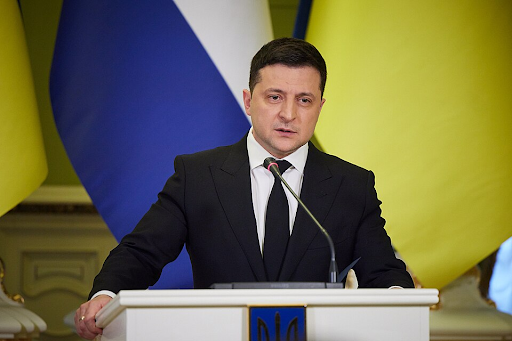
A cheap, mass-produced drone manufactured in Iran has become an unexpected thread connecting conflicts across thousands of miles. President Volodymyr Zelenskyy used the Shahed drone’s spread from Ukraine’s battlefields to the Middle East as the backdrop for his announcement that Ukraine would share its expertise in countering these weapons with the United States and regional allies.
Zelenskyy confirmed conversations with leaders from the UAE, Qatar, Bahrain, Jordan, and Kuwait about defense cooperation, and stated that a formal US request for drone defense equipment and technical specialists had been fulfilled. He described the connecting role of the Shahed drone as evidence of the broader geopolitical reality: Russia and Iran are partners whose coordinated actions are destabilizing multiple regions simultaneously.
The Iranian-made Shahed has achieved a grim kind of ubiquity. Russia has deployed it in tens of thousands against Ukrainian cities, infrastructure, and military positions. Iran has now turned it against nations in its own region. The drone’s spread demonstrates that the proliferation of cheap, effective weapons technology is one of the defining security challenges of the current era — and one that requires a coordinated international response.
Ukraine’s response to this challenge has been both practical and innovative. Engineers developed interceptors costing as little as $1,000 per unit that can effectively destroy Shaheds under real combat conditions. With domestic production now exceeding battlefield requirements, the country is positioned to share this solution with partners worldwide — turning the Shahed’s global spread into an opportunity for Ukraine to build international influence.
Zelenskyy tied this global role to Ukraine’s peace goals, noting that defense cooperation flows to nations that support Ukraine’s security. He acknowledged the disruption of peace talks by the Iran crisis, but argued that the connections being forged through shared experience with the Shahed drone are creating a new kind of international solidarity — one centered on practical security cooperation rather than abstract declarations of support.