
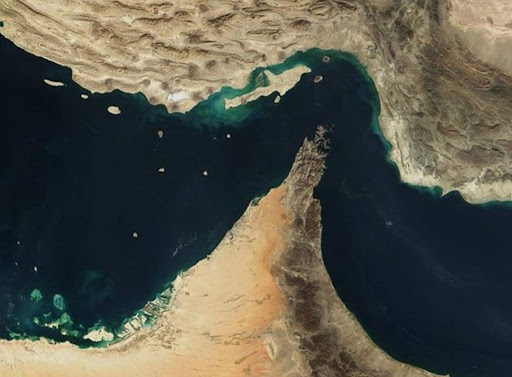
The failure of allied nations to mount a credible military response to Iran’s blockade of the Strait of Hormuz is sending a broader strategic message about the international community’s willingness to defend critical global energy infrastructure by force — a message that may embolden not only Iran but other state actors who are watching how the crisis unfolds. President Trump’s call for a naval coalition has drawn cautious or negative responses from the UK, France, China, Japan, South Korea, and others, and the sustained absence of any committed naval force is demonstrating that one of the world’s most critical chokepoints can be closed without triggering a coherent collective response.
Iran launched the blockade in late February as retaliation for US-Israeli airstrikes, generating the most severe oil supply disruption in history. One-fifth of global oil exports ordinarily flow through the passage. Tehran has attacked sixteen tankers, declared vessels bound for American or allied ports to be legitimate military targets, and threatened to mine the waterway. The combination of explicit threats and demonstrated capability has deterred every potential coalition partner from committing forces — a deterrence success that will be studied carefully by strategic actors around the world.
The detailed response from each targeted nation tells the story of allied hesitation. France ruled out sending ships while fighting continued. The UK explored lower-risk options. Japan described a very high threshold. South Korea pledged careful deliberation. Germany questioned the EU’s Aspides mission’s effectiveness. No government committed forces. From the perspective of other state actors who might consider similar coercive strategies in the future, the international response to the Hormuz blockade provides valuable data about the conditions under which the US-led alliance system will and will not respond to threats to global energy infrastructure.
The strategic lessons being drawn from the crisis extend beyond energy security to the broader question of collective security commitments. NATO’s Article 5 mutual defence guarantee covers member states’ territories — but the protection of global commons like international shipping lanes is a murkier area where collective commitments are less clear and less automatically triggered. The Hormuz crisis is illustrating the gaps in the international security architecture for protecting critical global infrastructure, gaps that may be exploited by other actors once the lessons of Iran’s success are fully absorbed.
China’s diplomatic engagement with Tehran, while aimed at resolving the immediate crisis, also has strategic implications for the broader question of deterrence. If China can help produce an arrangement that allows tanker passage without requiring military action, it will demonstrate that diplomacy can succeed where deterrence failed — but it will also demonstrate Iran’s ability to sustain its position long enough to achieve a negotiated outcome on its own terms. The Chinese embassy confirmed China’s commitment to constructive regional engagement. US Energy Secretary Chris Wright expressed hope that China would prove a constructive partner, acknowledging the importance of finding any path to resolution.