
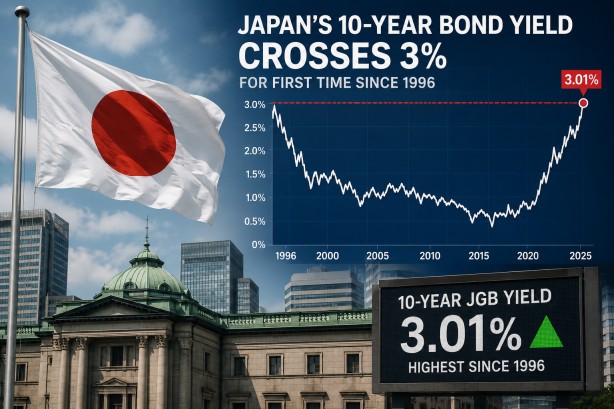
Japan’s bond market has witnessed a significant milestone with the 10-year government bond yield exceeding 3% for the first time since 1996. This development is reshaping the landscape for domestic fixed-income investments, enhancing their attractiveness compared to overseas options. In response, Japanese investors are beginning to reassess their holdings in foreign bonds, a move that could reverse the long-standing trend of Japanese capital flowing into international debt markets. This year alone, there has been a notable net outflow of ¥3 trillion ($18.7 billion) from overseas debt up to August 22, according to official reports.
The increase in domestic bond yields is making Japanese bonds more competitive, especially when factoring in the currency-hedging costs that diminish returns on foreign investments. Supporting this shift, a survey involving 82 Japanese corporate pension funds revealed the strongest inclination to boost domestic bond portfolios since the survey’s inception in 2008. This trend signals a potential pivot in investment strategies, prioritizing domestic assets over international ones.
This change holds substantial implications for global financial markets. Japanese investors have been pivotal players in purchasing foreign sovereign debt, including U.S. Treasuries. A continued decline in their overseas investments could exert upward pressure on global bond yields and elevate borrowing costs internationally. The decisions of Japanese investors in this regard are closely watched, given their significant influence on global debt markets.
The surge in Japanese bond yields is attributed to a combination of factors, including rising inflation concerns, the anticipation of further interest rate hikes by the Bank of Japan, and growing apprehension about the country’s fiscal health. Analysts suggest that while these factors are driving the current trend, it is more likely to represent a gradual reallocation towards domestic investments rather than an abrupt retreat from global markets.