
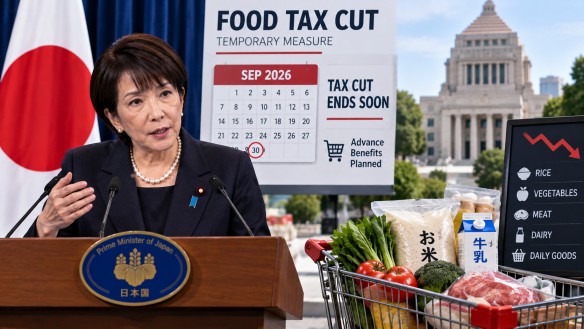
Japan is set to implement a new policy aimed at providing financial assistance to low- and middle-income families as the nation approaches the expiration of a temporary food consumption tax reduction in 2029. The plan, which targets alleviating the financial burden on these households, involves reducing the tax rate on food from the current 8% to 1% for a period of two years beginning in April 2027. Once this reduced rate concludes in April 2029, eligible households will receive an advance payment of half of the annual benefit to mitigate the impact of the tax reverting to its original rate.
The initiative is slated to launch in April 2027, with benefits tailored according to the recipients’ income levels and the number of children within each household. The fiscal estimates for 2027 and 2028 suggest that the annual distribution of these payments will amount to approximately ¥600 billion, or $4 billion. The government is working towards finalizing this policy by September, with intentions to present the necessary legislation during an extraordinary parliamentary session anticipated in October.
While the specific sources of funding for this tax relief have yet to be determined, the government intends to finance the endeavor by reassessing subsidies, special tax measures, and current spending practices, rather than resorting to issuing deficit-financing bonds. This approach underscores a commitment to fiscal responsibility while addressing the immediate needs of the population.
In addition to supporting households, the government is also planning to introduce measures aimed at assisting the agriculture, forestry, fisheries, and restaurant sectors, which might experience disruptions due to the tax adjustments. Retailers, on the other hand, will be granted additional time to adapt to the requirements for tax-inclusive price displays, ensuring a smoother transition as the changes take effect.