
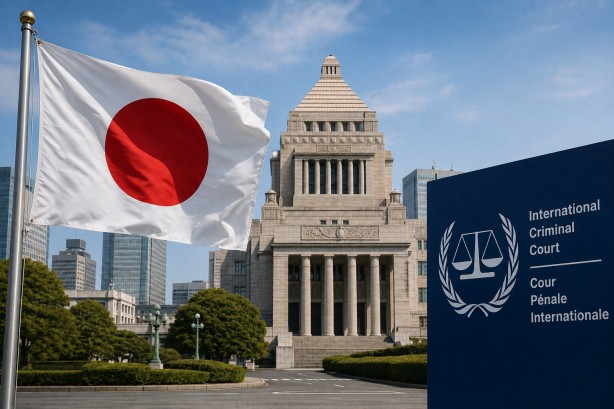
Japan has taken a measured stance in response to the United States’ decision to impose sanctions on Tomoko Akane, the president of the International Criminal Court (ICC). While avoiding direct criticism of the Trump administration, Prime Minister Sanae Takaichi described the sanctions as “very unfortunate.” She emphasized Japan’s intent to continue discussions with the U.S. and other relevant countries, highlighting the importance of maintaining a positive relationship with its only treaty ally.
Japan holds a significant position within the ICC, being its largest financial contributor and providing substantial personnel resources. Tomoko Akane, a Japanese national and former prosecutor, was appointed as an ICC judge in 2018 and made history in 2024 by becoming the first Japanese citizen to be elected as the court’s president. Despite the U.S.’s increasingly adversarial stance toward the ICC, Japan has maintained its support for the court and Akane.
In February 2025, President Donald Trump authorized sanctions against ICC personnel, which was part of a broader effort by the U.S. to weaken the court. U.S. Secretary of State Marco Rubio later stated Washington’s intention to encourage its allies to oppose the ICC. Japan, however, refrained from joining an international statement that condemned these U.S. sanctions, citing its important relationship with Washington as the reason for its cautious approach.
Despite the careful public response, the Japanese government has shown its support for the ICC and Akane. During a visit to Japan in January, Prime Minister Takaichi met with Akane, reaffirming Tokyo’s commitment to the court’s role. Akane had previously criticized Japan’s decision not to speak out against the U.S. sanctions, urging the country to adopt a stronger stance in support of the ICC and uphold the rule of law.