
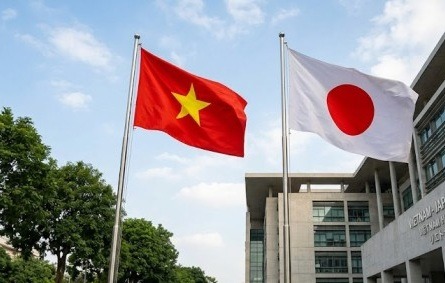
Việt Nam and Japan have committed to enhancing their defence cooperation, focusing on strategic areas such as military training, cybersecurity, defence industry development, United Nations peacekeeping operations, and efforts related to post-war recovery. This decision emerged from a meeting held in Hà Nội between Vietnamese Deputy Prime Minister and Minister of National Defence, General Phan Văn Giang, and General Uchikura Hiroaki, Chief of Staff of Japan’s Self-Defence Forces. Both officials deliberated on ways to bolster bilateral defence relations and improve the implementation of existing agreements.
In the discussions, General Giang reiterated Việt Nam’s dedication to strengthening mechanisms for consultation and dialogue. He highlighted the country’s interest in expanding cooperation across military branches and fostering partnerships in defence technology, military medicine, and cybersecurity. Giang pointed out that the relationship in defence has become a crucial component of the Comprehensive Strategic Partnership between Việt Nam and Japan.
The Vietnamese defence minister praised Japan for its support in various areas, including personnel training, defence industry development, technology transfer, and initiatives aimed at post-war recovery. He also advocated for more scholarship and training opportunities for Vietnamese defence personnel, particularly in the fields of science, engineering, and technology.
Japan continues to be a vital economic and strategic ally for Việt Nam, with robust cooperation in trade, investment, development assistance, and labour exchanges. Defence collaboration has notably expanded, underpinned by regular policy dialogues and military consultations between the two nations. General Uchikura expressed Japan’s ongoing commitment to deepening defence relations with Việt Nam, supporting increased cooperation in high-level exchanges, military education, cybersecurity, and armed forces healthcare services.
The two sides resolved to maintain close coordination to further reinforce mutual trust, enhance regional stability, and sustain long-term strategic cooperation.