
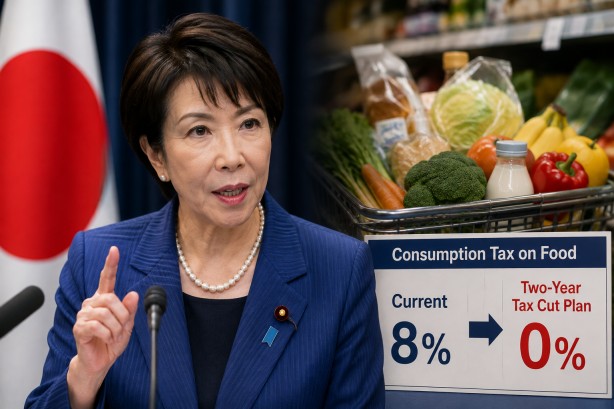
Japanese Prime Minister Sanae Takaichi has taken a significant step forward by proposing a plan to temporarily slash the consumption tax on food to nearly zero, aiming for Cabinet approval by next week and hoping for parliamentary endorsement later this year. The initiative, set to take effect in April 2027, would lower the food tax rate from its current 8% to just 1%, with additional income-linked benefits intended to offset the remaining cost for consumers. Takaichi emphasizes that this measure is designed to alleviate the financial burden on middle- and low-income families and assures that the tax reduction will last only two years.
Despite its potential benefits for many households, the proposal has encountered substantial opposition within the ruling Liberal Democratic Party (LDP). Critics are particularly concerned about the estimated cost of ¥10 trillion ($62.25 billion) and the absence of a defined funding strategy to support the initiative. These fiscal challenges have prompted questions about the viability of the plan and its impact on Japan’s budget.
Moreover, fiscal conservatives within the LDP have raised concerns about the long-term implications of the proposal, specifically the difficulties that may arise when attempting to reinstate the original tax rate after the two-year reduction period concludes. They argue that such a temporary measure could set a challenging precedent for future fiscal policy and budgeting.
Prime Minister Takaichi remains committed to advancing the proposal, highlighting its potential to provide immediate relief to those most affected by rising living costs. As the plan progresses through the approval process, it will be essential for the government to address the financial concerns raised by party members and critics to ensure its successful implementation and sustainability.
The outcome of this proposal could significantly influence Japan’s economic landscape, particularly for those struggling under the weight of current economic conditions. How the government navigates these hurdles will be closely watched, both domestically and internationally, as it seeks to balance fiscal responsibility with social welfare. The next steps in this legislative journey will be crucial in determining whether Takaichi’s vision for tax relief can become a reality.