
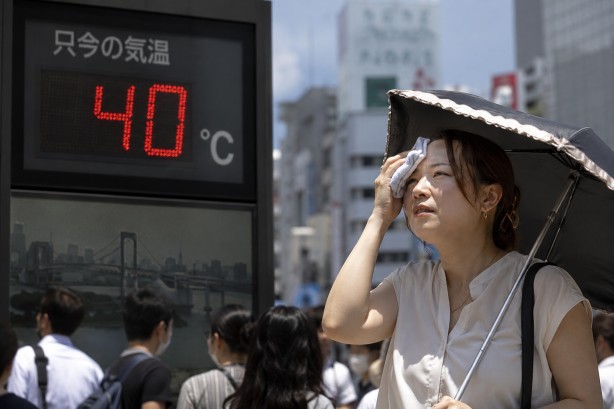
Japan is grappling with a severe heatwave as temperatures soared beyond 40°C on July 21, marking the ninth year in a row that such extreme heat has been recorded. A powerful high-pressure system was responsible for these sweltering conditions, which swept across various regions of the country. This year, for the first time since the introduction of the term “kokushobi” in April, used to describe days when temperatures hit 40°C or above, such intense heat has been experienced.
The city of Tajimi in Gifu Prefecture witnessed the highest temperature, peaking at 40.3°C. Not far from there, Gujo also faced temperatures hitting the 40°C mark. Meanwhile, in Aichi Prefecture, the city of Toyota recorded a scorching 40.1°C. These figures underscore the widespread and intense nature of the heatwave affecting both eastern and western parts of Japan.
By the afternoon, a significant number of weather observation stations across Japan reported soaring temperatures. Out of 914 stations, 255 measured temperatures of at least 35°C. This widespread heat has prompted authorities to take action to safeguard public health.
In response to the escalating temperatures, the Environment Ministry and the Japan Meteorological Agency issued heatstroke alerts across 42 prefectures, the highest number of such alerts this year. Officials have urged residents to take necessary precautions, including staying hydrated, using air conditioning, and replenishing salt levels, to prevent heat-related illnesses.