
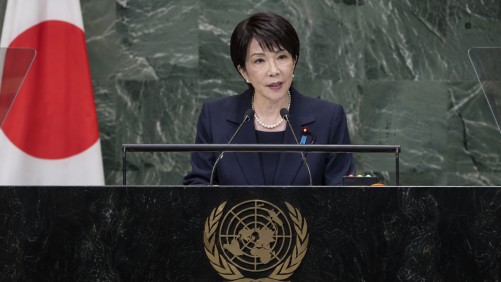
Japan’s commitment to supporting international law and maintaining global stability is set to impact international relations and energy security. Prime Minister Sanae Takaichi emphasized these priorities during her inaugural address to the United Nations General Assembly, marking a significant reaffirmation of Japan’s role in upholding the International Criminal Court (ICC) and advocating for reforms within the UN Security Council.
Takaichi’s speech underscored Japan’s ongoing dedication to a free and open international order, particularly as the stable environment post-Cold War has shifted. Highlighting the essential role of the United Nations, she called for changes to ensure the Security Council better represents the global community. This stance positions Japan as a proactive player in international governance, potentially influencing future diplomatic collaborations and policy developments.
Addressing pressing global issues, Takaichi condemned unilateral forceful actions, citing Russia’s war in Ukraine as a critical example. She urged stronger international cooperation to counter North Korea’s nuclear and missile threats, maintaining that Japan remains open to dialogue for resolving the longstanding issue of Japanese citizens abducted by North Korea.
On the economic front, Takaichi’s focus on energy security involves bolstering ties with Gulf countries to ensure stable energy supplies amid global disruptions. This strategic move aims to enhance Japan’s resilience in energy procurement and could lead to increased collaboration on critical resources and advancements in artificial intelligence.
While Takaichi did not directly mention U.S. sanctions against ICC President Tomoko Akane, her reaffirmation of support for international judicial bodies signals Japan’s commitment to maintaining a rules-based order, which may influence international legal frameworks and relations.