
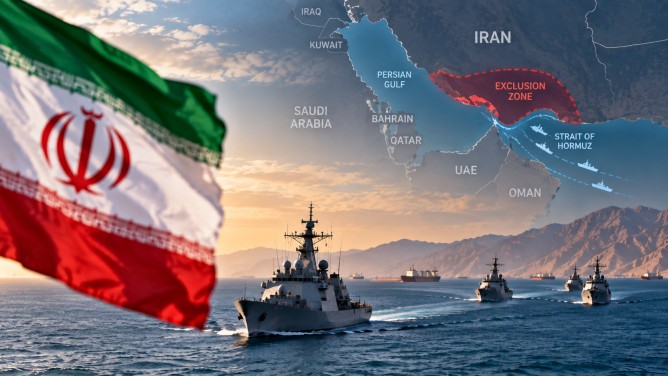
Iran has unveiled plans to create a new “exclusion zone” near the strategically crucial Strait of Hormuz, targeting vessels it believes are attempting passage through the waterway. Mohsen Rezaei, recently appointed as the head of Iran’s Supreme National Security Council, announced that this zone would stretch from the U.S. naval blockade area towards the Strait of Hormuz and into the Arabian Gulf. According to Rezaei, any vessels identified as entering this zone with intentions to cross the strait might face inclusion on an Iranian sanctions list.
This development comes amid heightened tensions following significant conflict escalation, including a U.S. military strike on three Iranian oil tankers. This action was in response to Iran’s ballistic missile attacks on U.S. warships. Furthermore, Iran asserted it had targeted an unmanned U.S. vessel attempting entry into the strait, a claim that has been denied by U.S. military officials.
The Strait of Hormuz is a vital conduit for global oil and gas shipments, and any disruptions here have sparked concerns over energy prices and broader economic impacts globally. In response to the tensions, the United States has intensified its naval presence to enforce a blockade on Iranian ports and curb Tehran’s oil exports. Additionally, Washington has ramped up economic sanctions on Iran following the breakdown of diplomatic negotiations.
Amidst these strained relations, Rezaei emphasized Iran’s commitment to diplomacy but stressed the need for stronger assurances in any future agreements. Talks between Tehran and Washington have stalled, with both sides levying continued accusations of breaches against each other. Despite the ongoing tensions, U.S. officials maintain that significant volumes of oil continue to flow through the Strait of Hormuz, aided by naval protection and alternative regional pipelines.