
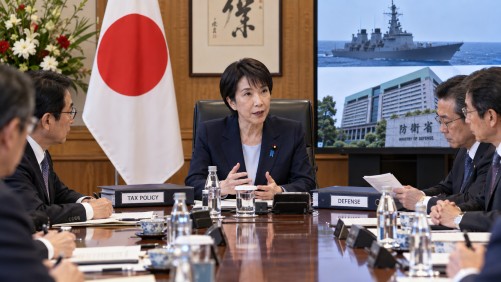
Japan is poised to tackle significant economic and diplomatic challenges with its newly reshuffled Cabinet, as it prioritizes reducing the consumption tax on food items and implementing income-linked cash payments. These initiatives are set to be addressed during an extraordinary Diet session in early October, highlighting the government’s focus on economic relief amid ongoing fiscal pressures.
Prime Minister Sanae Takaichi’s administration will need to navigate a complex political landscape, as the ruling coalition of the Liberal Democratic Party and Nippon Ishin lacks a majority in the Upper House, necessitating opposition support to pass key legislation. Finance Minister Satsuki Katayama, who retains her position, will spearhead efforts on the proposed tax reductions and assistance payments, signaling continuity in Japan’s economic strategy.
On the international front, Japan’s diplomatic relations remain a focal point, particularly with China and the United States. Foreign Minister Toshimitsu Motegi and Defense Minister Shinjiro Koizumi have been retained to manage these critical relationships. Takaichi’s participation in the upcoming Asia-Pacific Economic Cooperation summit in Shenzhen, China, underscores the importance of these diplomatic efforts, especially amidst ongoing tensions related to Taiwan.
National security is another priority for the Japanese government, which plans to revise key security documents, including the National Security Strategy, by the end of the year. This revision aims to guide Japan’s foreign and defense policies, with an emphasis on managing regional security threats. The debate over increased defense spending and its funding without burdening the public remains a contentious issue within the government.
Constitutional reform is also on Takaichi’s agenda, although progress has been limited in preparing specific amendment proposals. Additionally, the government plans to pursue legislation to reduce the number of Lower House seats, a reform strongly advocated by Nippon Ishin. As Japan navigates these multifaceted challenges, the next few months will be critical in determining the effectiveness of Takaichi’s leadership and the Cabinet’s ability to implement its ambitious agenda.